
DR Finance India Daily
What Is Loan-to-Value (LTV) Ratio?
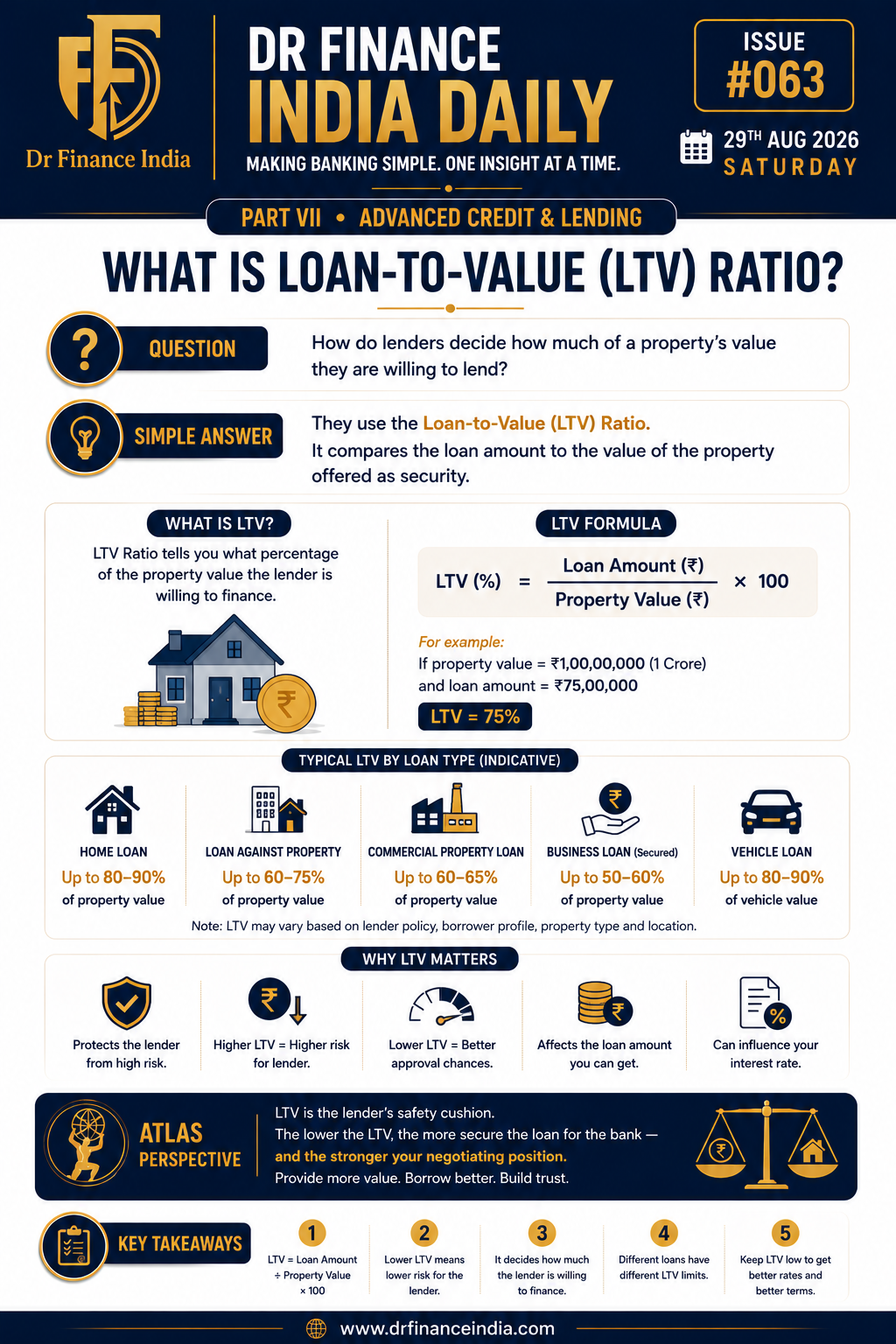
Loan-to-Value (LTV) ratio compares the loan amount with the value of the asset offered as security, and influences how much a lender is willing to finance.
Official Issue Poster
The Question
How do lenders decide how much of a property's value they are willing to lend?
The Simple Answer
They use the Loan-to-Value (LTV) Ratio. It compares the loan amount to the value of the property offered as security.
Why It Matters
Protects the lender from high risk. Higher LTV means higher risk for lender. Lower LTV means better approval chances. Affects the loan amount you can get. Can influence your interest rate.
Detailed Explanation
Loan-to-Value, or LTV, compares the loan amount with the value of the asset or property against which the loan is being considered.
For example, if a property is valued at ₹1 crore and the proposed loan is ₹75 lakh, the LTV is 75%. From the lender's perspective, the portion not financed provides a cushion against changes in value and recovery risk.
Permitted LTV can vary by product, lender policy, property type, location, borrower profile and applicable regulatory requirements. The value considered by the lender may also differ from the price expected by the borrower because lenders follow their own valuation and eligibility processes.
Key Takeaways
- ✓LTV = Loan Amount ÷ Property Value × 100.
- ✓Lower LTV means lower risk for the lender.
- ✓It decides how much the lender is willing to finance.
- ✓Different loans have different LTV limits.
- ✓Keep LTV low to get better rates and better terms.
Borrower Takeaway
A lower requested loan relative to the accepted property value generally gives the lender greater collateral protection. LTV alone does not determine approval — repayment capacity, legal and technical checks, credit profile and documentation remain important.
Atlas Perspective
LTV is the lender's safety cushion. The lower the LTV, the more secure the loan for the bank — and the stronger your negotiating position. Provide more value. Borrow better. Build trust.