
DR Finance India Daily
What Is Collateral Coverage?
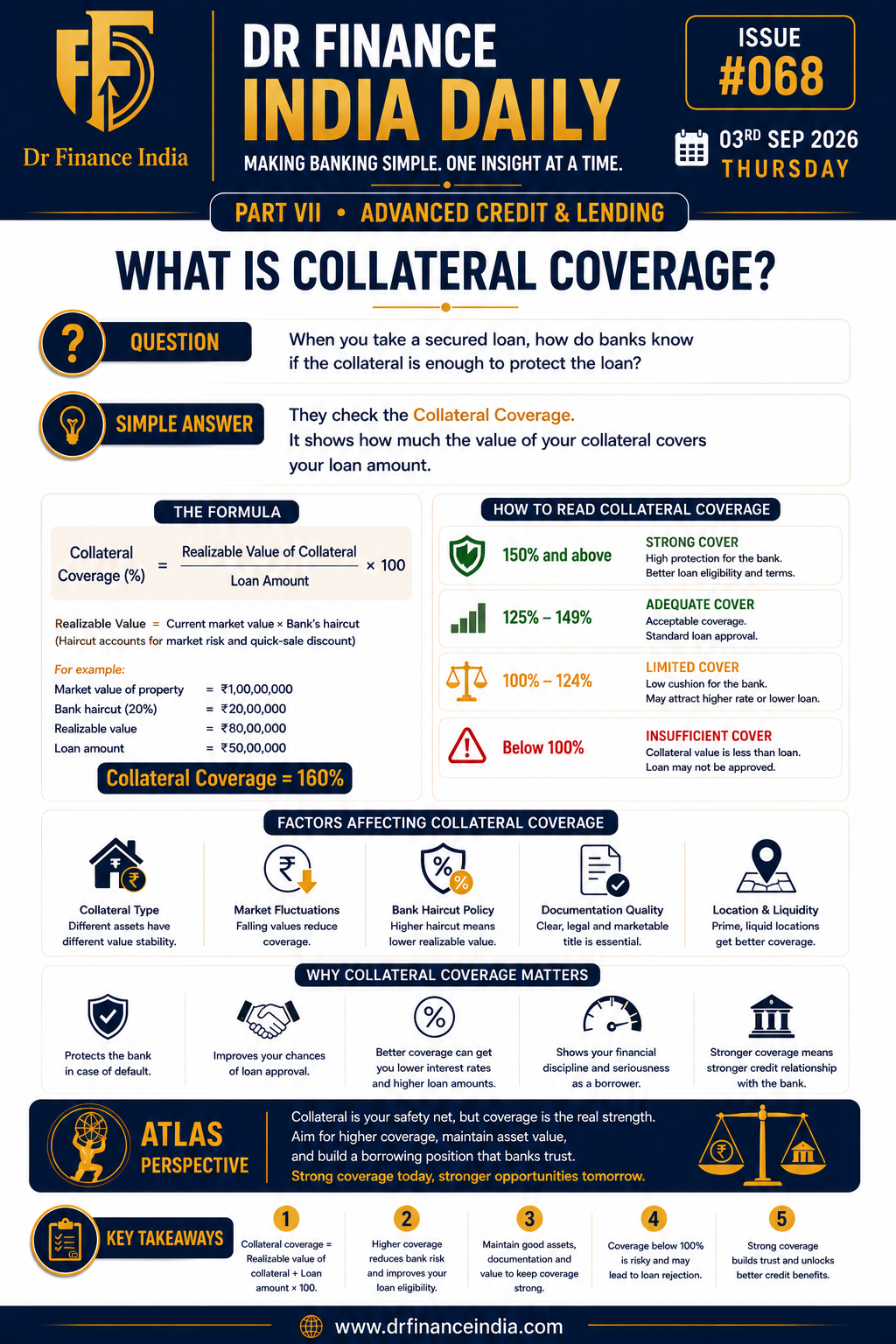
Collateral coverage measures how much security value is available relative to the loan exposure, after applying the lender's valuation margins.
Official Issue Poster
The Question
When you take a secured loan, how do banks know if the collateral is enough to protect the loan?
The Simple Answer
They check the Collateral Coverage. It shows how much the value of your collateral covers your loan amount.
Why It Matters
Protects the bank in case of default. Improves your chances of loan approval. Better coverage can get you lower interest rates and higher loan amounts. Shows your financial discipline and seriousness as a borrower. Stronger coverage means stronger credit relationship with the bank.
Detailed Explanation
Collateral coverage helps a lender understand how much security value is available in relation to the loan exposure.
For credit assessment, a lender may not always use the full market value of an asset. Depending on the asset and policy, it may consider an accepted or realisable value after applying appropriate margins or haircuts. The resulting security value can then be compared with the loan amount or exposure.
Coverage requirements vary by lender, facility and type of collateral. Property quality, title, location, marketability, valuation, existing charges and legal or technical findings can all affect how the security is viewed.
Key Takeaways
- ✓Collateral coverage = Realizable value of collateral ÷ Loan amount × 100.
- ✓Higher coverage reduces bank risk and improves your loan eligibility.
- ✓Maintain good assets, documentation and value to keep coverage strong.
- ✓Coverage below 100% is risky and may lead to loan rejection.
- ✓Strong coverage builds trust and unlocks better credit benefits.
Borrower Takeaway
A high headline property value does not automatically translate into the same lending value. The lender's accepted valuation, policy margins and quality of security documentation are what matter for the credit decision.
Atlas Perspective
Collateral is your safety net, but coverage is the real strength. Aim for higher coverage, maintain asset value, and build a borrowing position that banks trust. Strong coverage today, stronger opportunities tomorrow.