
DR Finance India Daily
What Is Loan Fraud?
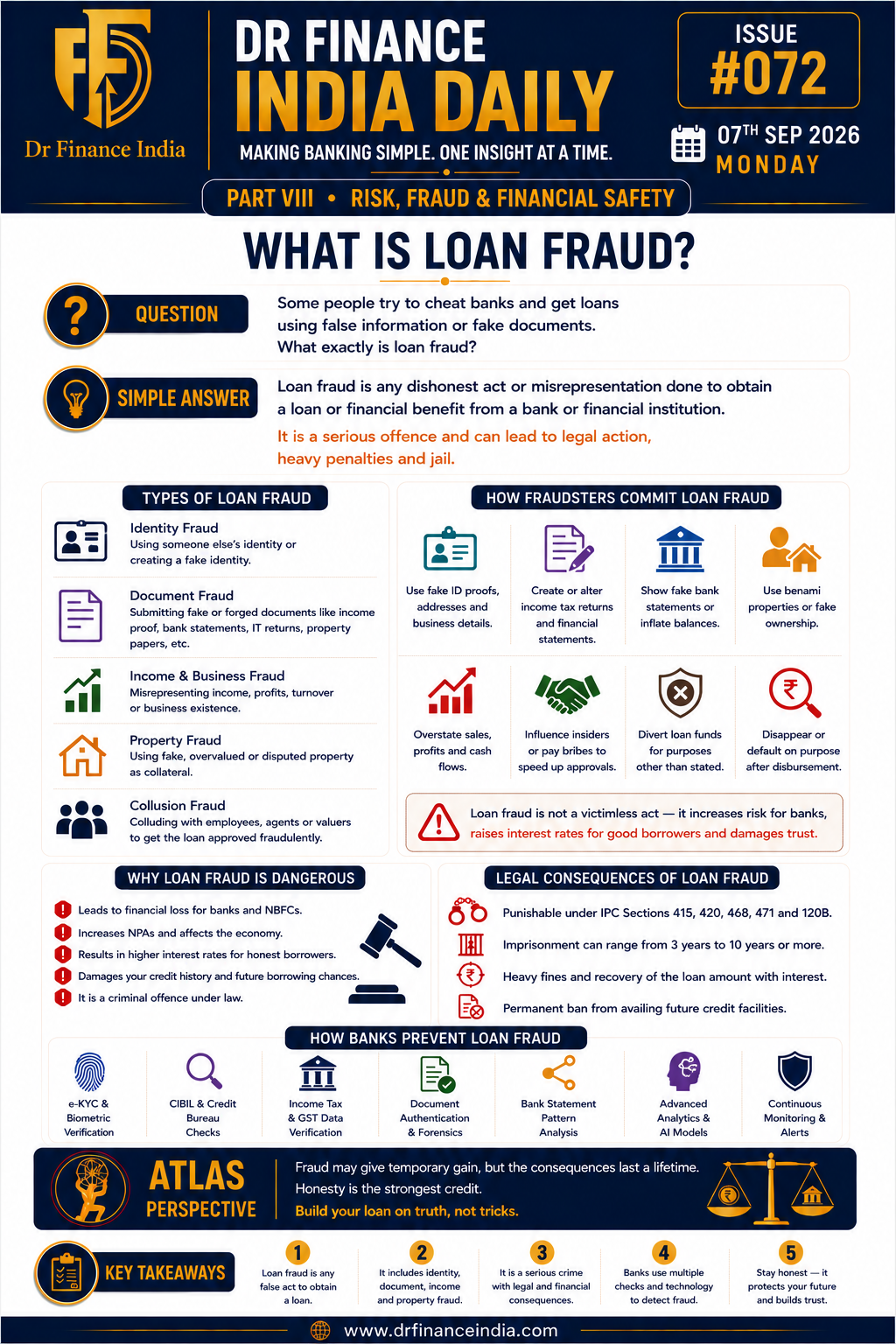
Loan fraud involves deliberately using false information, forged documents or dishonest arrangements to obtain credit — with consequences that extend well beyond rejection.
Published by Dr Finance India · Educational content — not financial advice
Official Issue Poster
The Question
What is loan fraud?
The Simple Answer
Loan fraud involves deliberately using false information, forged documents, misrepresentation or dishonest arrangements to obtain credit or another financial benefit.
Why It Matters
Understanding what constitutes loan fraud helps borrowers avoid actions that may seem minor but carry serious financial and legal consequences.
Detailed Explanation
Loan fraud involves deliberately using false information, forged documents, misrepresentation or dishonest arrangements to obtain credit or another financial benefit.
It can take many forms. Examples include identity fraud, falsified income records, manipulated bank statements, false business information, property-related misrepresentation or collusion intended to influence the lending process.
Banks and financial institutions use verification, bureau checks, data matching, document authentication, transaction analysis and other controls to identify suspicious applications. Consequences can extend well beyond rejection of the loan and may include recovery action or legal proceedings depending on the circumstances and applicable law.
Key Takeaways
- ✓Loan fraud involves deliberate misrepresentation to obtain credit.
- ✓Forms include identity fraud, false income records and property misrepresentation.
- ✓Banks use multiple controls to identify suspicious applications.
- ✓Consequences can extend to recovery action or legal proceedings.
- ✓Transparent disclosure protects both borrower and lender.
Borrower Takeaway
Never alter or fabricate information to improve loan eligibility. A genuine application with transparent disclosure protects both the borrower and the integrity of the lending process.
Atlas Perspective
A genuine application with transparent disclosure protects both the borrower and the integrity of the lending process. The short-term temptation to misrepresent rarely survives contact with the consequences.
Share This Insight