
DR Finance India Daily
What Is Open Banking?
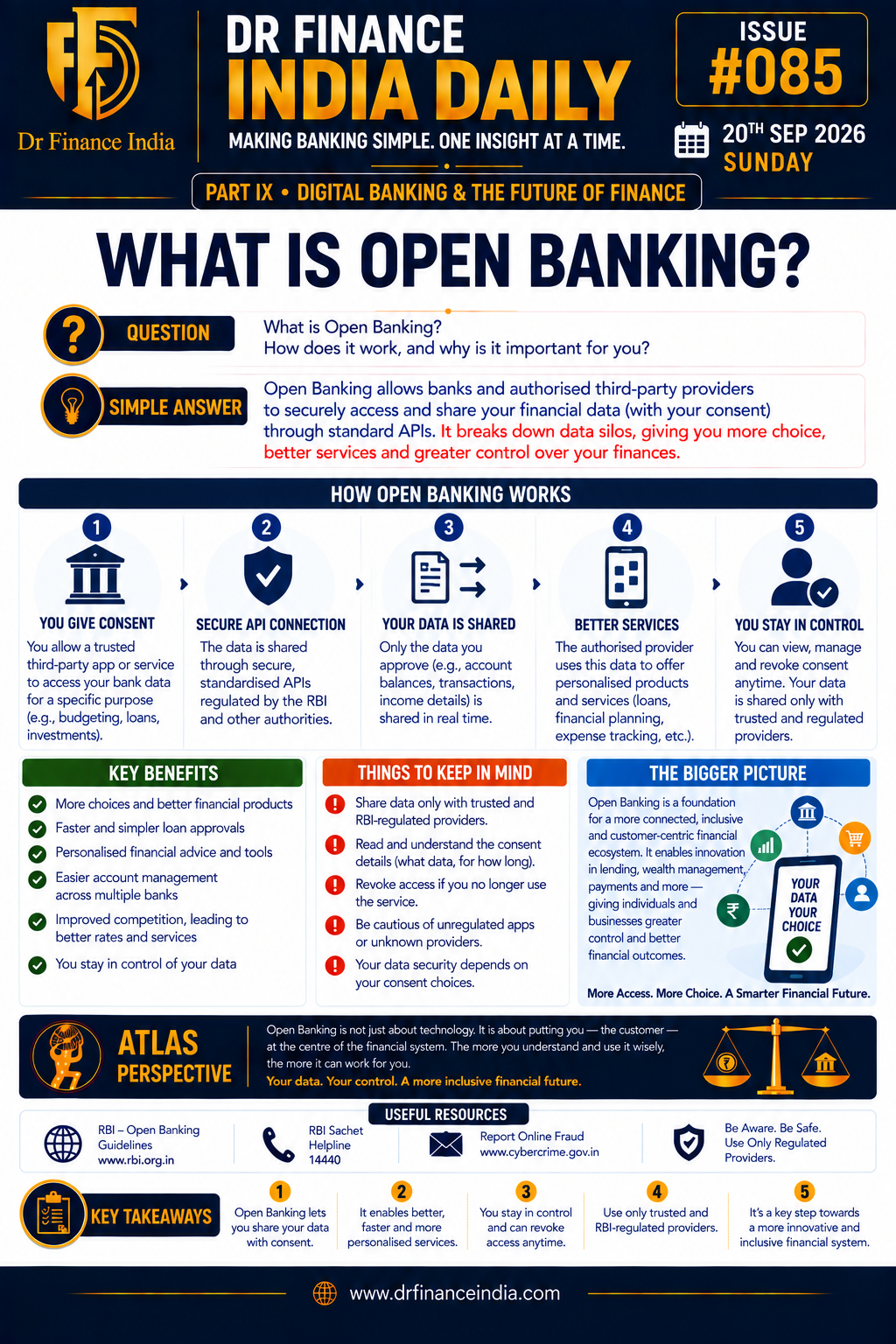
Open banking describes a more connected approach to financial services where authorised systems exchange permitted financial data through secure, consent-based interfaces.
Published by Dr Finance India · Educational content — not financial advice
Official Issue Poster
The Question
What is open banking?
The Simple Answer
Open banking describes a more connected approach to financial services in which authorised systems can exchange permitted financial data through secure technology interfaces, subject to applicable rules and customer consent — enabling more seamless and personalised financial services.
Why It Matters
Open banking can create convenience and choice, but data access should remain purposeful and controlled — understanding it helps people manage their permissions wisely.
Detailed Explanation
Open banking describes a more connected approach to financial services in which authorised systems can exchange permitted financial data through secure technology interfaces, subject to applicable rules and customer consent.
The concept can reduce information silos and allow financial services to work more seamlessly across institutions and applications. Potential uses include account aggregation, lending, financial-management tools and more personalised services.
The exact regulatory and technical structure differs between markets. In India, consent-based financial-data initiatives such as the Account Aggregator ecosystem form an important part of the broader movement toward more interoperable financial services.
Key Takeaways
- ✓Open banking enables authorised data exchange between financial institutions.
- ✓It can reduce information silos and enable more seamless financial services.
- ✓Uses include account aggregation, lending and personalised financial tools.
- ✓India's Account Aggregator ecosystem is a key part of this movement.
- ✓Understand the permissions you provide and use only trusted, regulated channels.
Borrower Takeaway
Greater connectivity can create convenience and choice, but data access should remain purposeful and controlled. Understand the permissions you provide and use trusted, regulated financial-service channels.
Atlas Perspective
Greater connectivity can create convenience and choice, but data access should remain purposeful and controlled. Understand the permissions you provide and use trusted, regulated financial-service channels.
Share This Insight