
DR Finance India Daily
How to Protect Yourself from Digital Banking Fraud
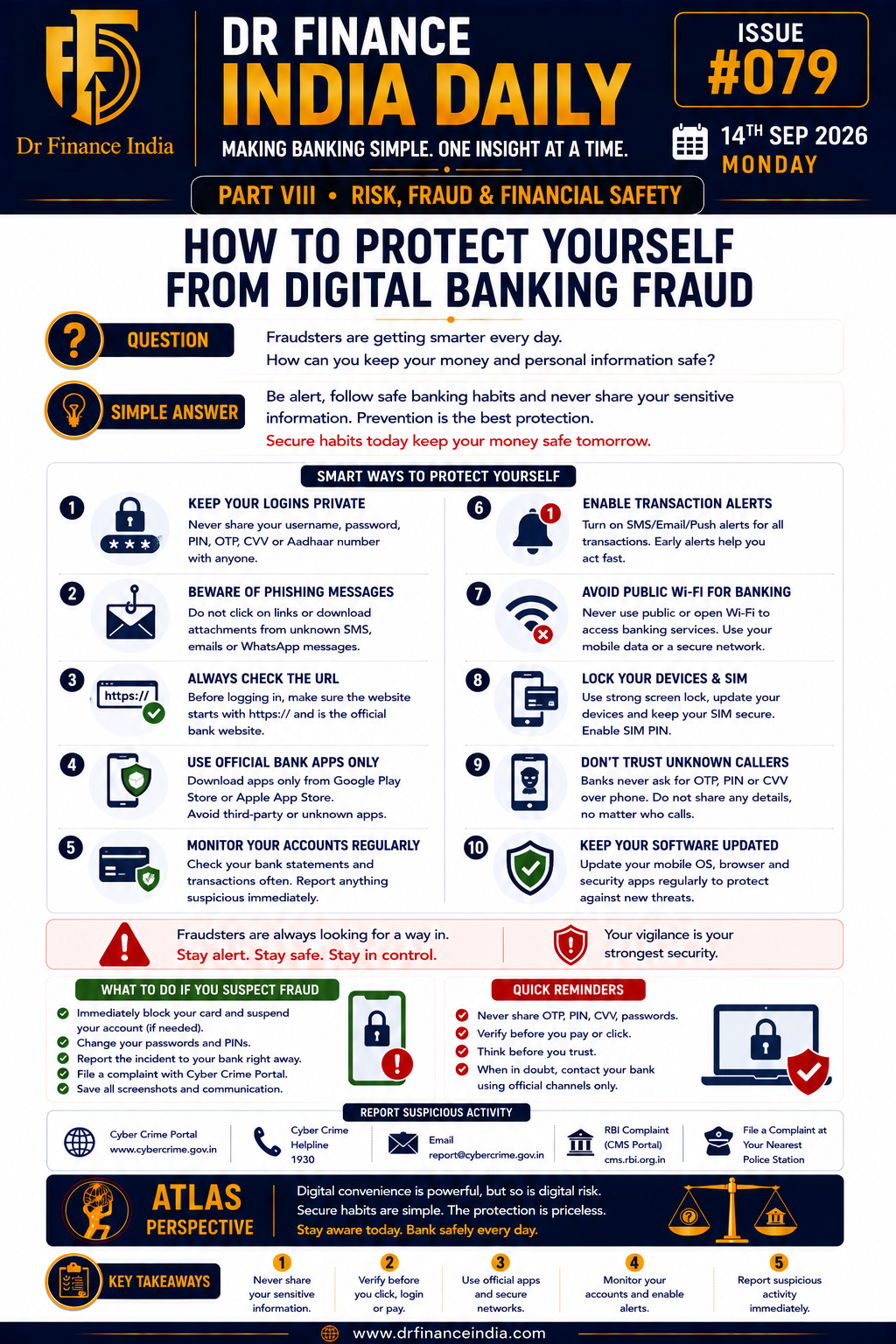
Digital banking safety depends heavily on everyday habits — fraudsters exploit urgency, impersonation, phishing links and the voluntary sharing of confidential information.
Published by Dr Finance India · Educational content — not financial advice
Official Issue Poster
The Question
How can you protect yourself from digital banking fraud?
The Simple Answer
Digital banking safety depends on everyday habits: never share passwords, PINs or OTPs; use official apps and websites; enable transaction alerts; and verify unexpected requests independently before acting.
Why It Matters
Digital fraud is largely behavioural — most successful attacks exploit human responses rather than technical vulnerabilities. Practical habits significantly reduce the risk.
Detailed Explanation
Digital banking is convenient, but safe use depends heavily on everyday habits. Fraudsters commonly exploit urgency, impersonation, phishing links, malicious apps and the voluntary sharing of confidential information.
Never share passwords, PINs, OTPs or card security details. Use official banking apps and websites, keep devices updated, enable transaction alerts and avoid conducting sensitive banking activity over insecure networks.
Treat unexpected calls and messages cautiously even when the sender claims to represent a bank or authority. Independently contact the institution through its official channel if you need to verify a request.
Key Takeaways
- ✓Never share passwords, PINs, OTPs or card security details.
- ✓Use only official banking apps and websites.
- ✓Enable transaction alerts and keep devices updated.
- ✓Treat unexpected calls or messages cautiously, even from apparent bank representatives.
- ✓Verify before you click, pay or share information.
Borrower Takeaway
Digital security is largely behavioural. Verify before you click, pay or share information, and report suspicious activity quickly through official channels.
Atlas Perspective
Digital security is largely behavioural. The most effective protection is not a technical tool — it is the habit of pausing to verify before you click, pay or share information.
Share This Insight