
DR Finance India Daily
How Banks Assess Self-Employed Borrowers
For self-employed borrowers, lenders assess both personal credit behaviour and the financial strength of the underlying business or profession.
Official Issue Poster
The Question
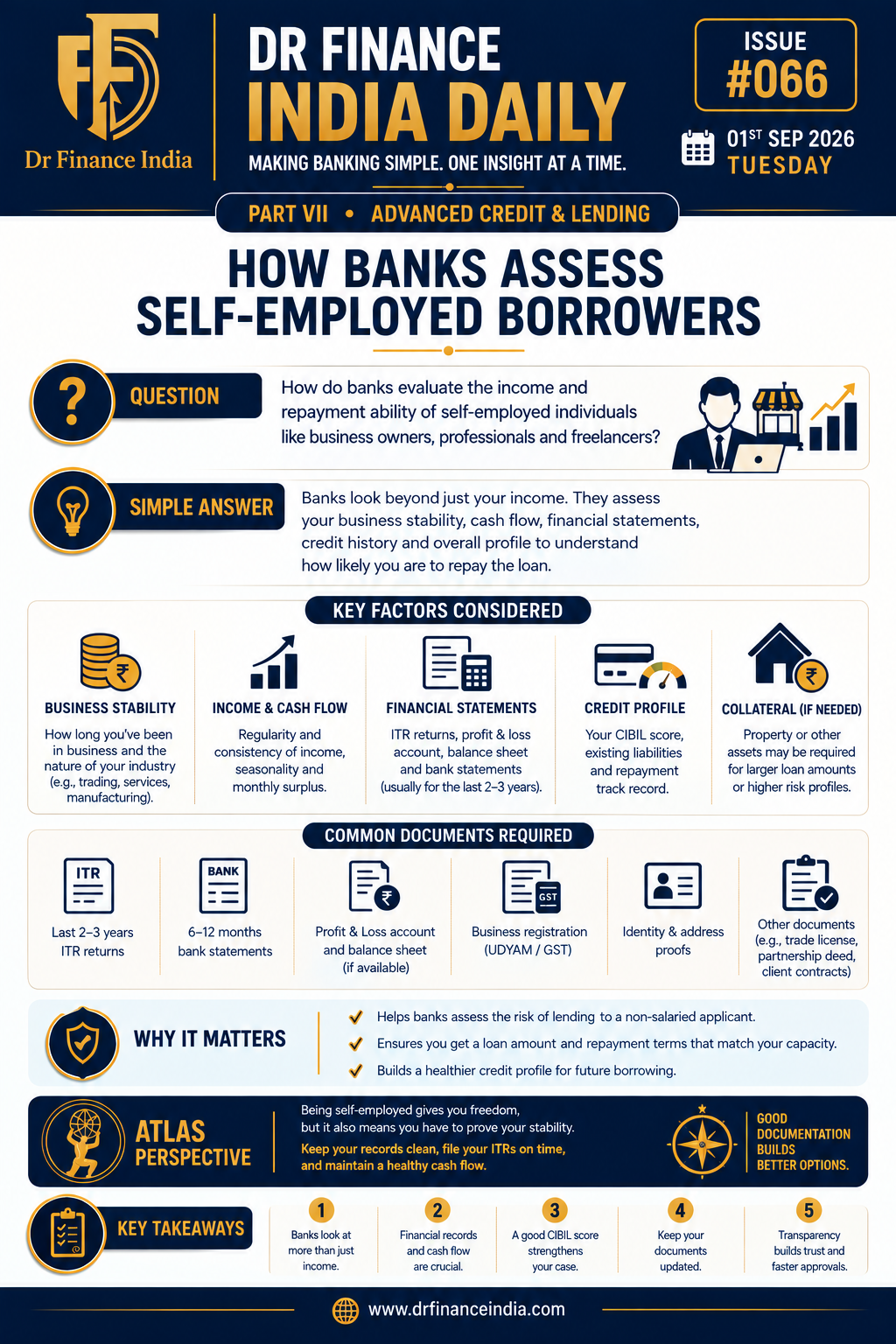
How do banks evaluate the income and repayment ability of self-employed individuals like business owners, professionals and freelancers?
The Simple Answer
Banks look beyond just your income. They assess your business stability, cash flow, financial statements, credit history and overall profile to understand how likely you are to repay the loan.
Why It Matters
Helps banks assess the risk of lending to a non-salaried applicant. Ensures you get a loan amount and repayment terms that match your capacity. Builds a healthier credit profile for future borrowing.
Detailed Explanation
For a self-employed borrower, lenders usually need to understand both personal credit behaviour and the financial strength of the underlying business or profession.
Assessment may include business vintage, nature of activity, turnover, profitability, cash flow, bank statements, income-tax returns, financial statements, GST information where applicable, existing borrowings and credit bureau history. For secured facilities, the lender may additionally evaluate the proposed collateral.
The documents and assessment method vary by lender and product. A lender may look for consistency between declared income, financial statements, tax filings and actual banking behaviour rather than relying on any single document.
Key Takeaways
- ✓Banks look at more than just income.
- ✓Financial records and cash flow are crucial.
- ✓A good CIBIL score strengthens your case.
- ✓Keep your documents updated.
- ✓Transparency builds trust and faster approvals.
Borrower Takeaway
Maintain clean financial records, file statutory returns on time and keep banking conduct disciplined. A well-documented business is easier for a lender to understand and evaluate.
Atlas Perspective
Being self-employed gives you freedom, but it also means you have to prove your stability. Keep your records clean, file your ITRs on time, and maintain a healthy cash flow. Good documentation builds better options.